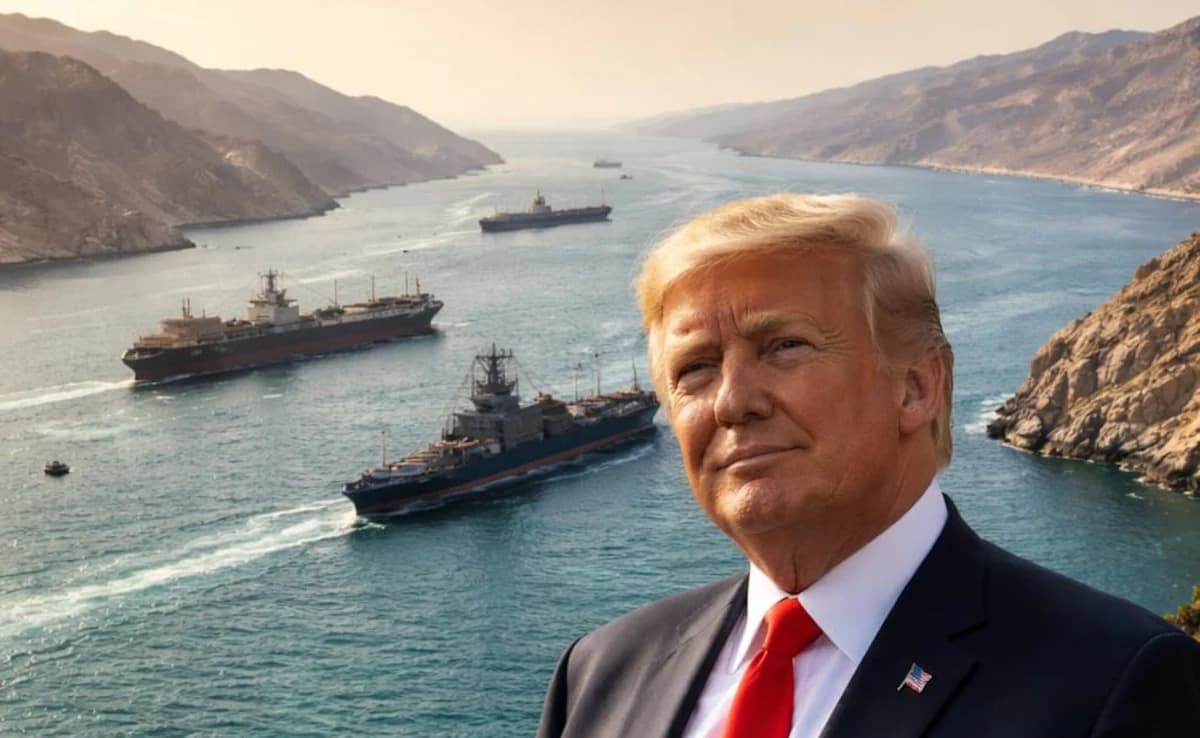
On July 14, 2026, President Donald Trump announced a plan to impose a 20 percent fee on cargo passing through the strategically significant Strait of Hormuz, a waterway crucial for global oil transport. This move comes amid heightened tensions between the United States and Iran, following a series of U.S. military strikes on Iranian targets and the re-imposition of a naval blockade by U.S. forces. Trump suggested that the revenue generated from this toll could be tied to the costs of military protection in the region.
Despite Trump's claims, his administration's legal stance has indicated that such fees could potentially violate international law. Additionally, leaders from various countries reportedly expressed a preference for investing in the U.S. to support their shipping needs rather than paying tolls. Trump stated that maritime operations in the Strait would remain open to international shipping, except for Iranian-linked vessels, which reflects a significant shift in the U.S. stance toward maritime security in the area.
The proposal has caused concern among the international shipping industry, with fears of increased transportation costs and disruptions in trade due to the ongoing conflict in the region. As the situation continues to develop, the implications of Trump's plan are being closely monitored by various stakeholders in the maritime and geopolitical arenas.
 Skip to content
Comments · 0 (subscribers)
Sign in to join the discussion.
No comments yet. Be the first to join the discussion.